When people talk about solar, they often focus only on the good side. In fact, the advantages and disadvantages of photovoltaic power generation both exist, and you really feel them when a system is connected to the grid or installed on a roof. At Bright Solar we work with PV every day, so we see not only the “green dream”, but also the very real technical and economic limits.
Below is a simple, honest walk-through – not a lab report, just how PV behaves in the real world.
Disadvantages of photovoltaic power generation
Before talking about the benefits, it’s fair to look at the weak points. Part of understanding the advantages and disadvantages of photovoltaic power generation is knowing where PV still needs support from the grid or storage.
1. Strong dependence on weather and climate Without batteries, a grid-connected PV system will follow the sun and the sky. If the city is covered by cloud, dust, smog or heavy fog, output drops quickly. On a sunny day at noon, power can be high; an hour later a cloud passes and the power falls. This fluctuation brings challenges for grid dispatch and for users that expect perfectly stable power.
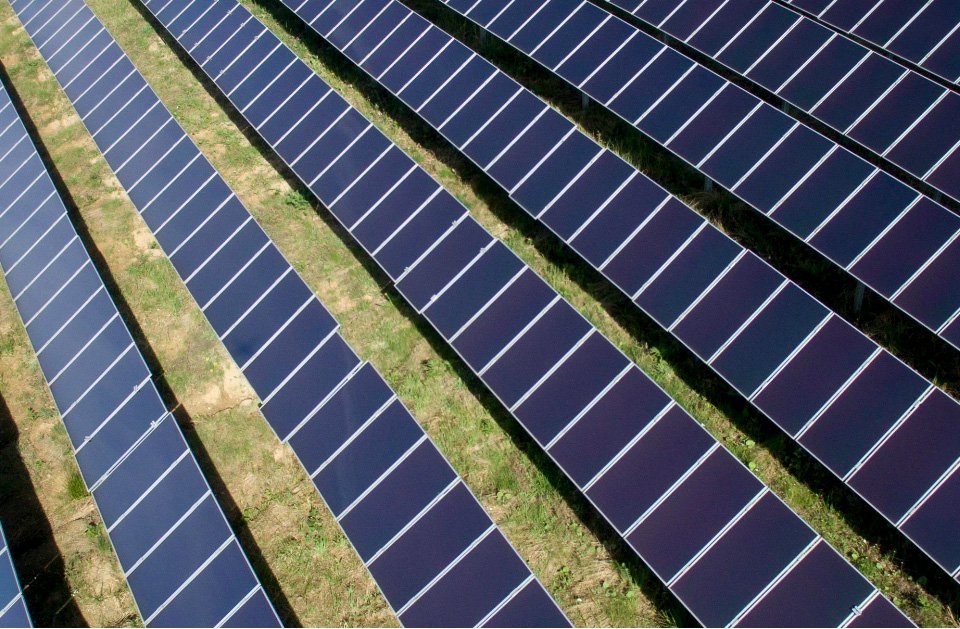
2. Geographical and land use limits Most practical PV today is “distributed” – on rooftops, carports, façades and other existing structures. You can build large ground-mount plants, but if you put huge solar fields on farmland or sensitive land, cost, land use and ecological impact become questions. So, in many cities, PV is most efficient when combined with buildings rather than standing alone.
3. Transmission and grid support issues Even if panel prices drop, you still face the issue of getting big amounts of PV power from remote deserts or coasts to load centers. High-voltage long-distance lines, grid stability, system inertia, frequency regulation, excitation – all of these must be handled mainly by conventional generators or new grid technologies. PV itself has no rotating mass and very limited built-in support for frequency and voltage.
4. Limited conversion efficiency Another point in the advantages and disadvantages of photovoltaic power generation is efficiency. Compared with fossil plants or large hydro, commercial PV modules still have moderate conversion efficiency. Good modules can exceed 20%, but a lot of sunlight is still not converted into electricity, especially in low-cost or older systems.
5. Day–night cycle and angle of the sun PV simply does not produce at night. Generation also changes with season, location and the sun’s angle. In the morning and late afternoon, power is lower. This means that storage or backup power is required if you need 24-hour supply from solar alone.
Advantages of photovoltaic power generation
Now the positive side. Once you understand the limits, the advantages and disadvantages of photovoltaic power generation look very different: PV may not be perfect, but its strengths are unique.
1. Massive and inexhaustible resource Solar energy is huge on a planetary scale. As long as the sun is shining, there is no “fuel depletion” risk. Unlike coal, gas or oil, there is no mining, shipping or fuel contract behind each kWh.
2. Clean, quiet and low risk PV generates electricity without smoke, exhaust or local pollution. There is no combustion process, no moving turbine blades and almost no noise. This is why PV can be placed close to homes, schools, offices and farms without disturbing daily life.
3. Flexible siting and use of idle surfaces One big advantage in the advantages and disadvantages of photovoltaic power generation discussion is the ability to use existing roofs and structures:
Residential and commercial rooftops
Factory sheds and warehouses
Carports, bus stations, farm buildings
In off-grid regions or complex terrain where grid extension is expensive, a PV system may be the only realistic way to provide electricity.
4. Local power, less dependence on long lines PV can generate and supply power at the same location, reducing the need for new transmission lines. For a remote house, telecom station, island, mountain village or desert site, local PV means less diesel, less transport and less maintenance of fuel-based generators.
5. High “quality” of energy and short construction period The electricity from PV systems is directly usable as standard AC or DC power after conversion. Project lead time is usually short – many rooftop systems are installed within weeks. From decision to energy output, the timeline is much shorter than for large conventional plants.
6. Good public acceptance Most users view rooftop solar as positive: it looks modern, it is quiet, and it sends a clear message about clean energy. This social acceptance is an invisible but real advantage when planning city projects or public buildings.
Bright Solar’s perspective
Looking at the advantages and disadvantages of photovoltaic power generation, Bright Solar does not pretend PV is perfect. Climate, grid integration and efficiency are real challenges. At the same time, the long-term direction is clear:
Panel performance continues to improve
Costs keep trending down over the years
Demand for clean, local energy keeps rising
As a manufacturer and solution provider, Bright Solar focuses on making PV modules, off-grid kits and supporting products that work reliably within these limits. When technology is chosen and designed correctly, the advantages of photovoltaic power generation – clean, quiet, local, fuel-free power – strongly outweigh the disadvantages for many homes, businesses and remote sites.
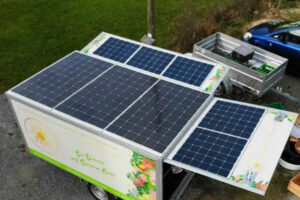
Explore Project France RV 2013, a major off-grid power setup featuring 1600W of Bright Solar flexible panels (100W, 200W, 150W). See how this RV achieved total energy independence.
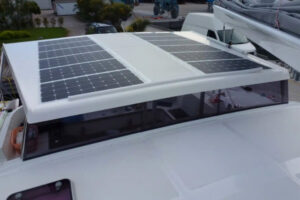
Discover how Project France Marine 2016 utilized twelve 100W flexible solar panels from Bright Solar to create a robust 1.2kW marine power system for extended cruising.
Bright Solar’s solar battery charger is ultra lightweight, foldable, water resistant and fast charging, with dual USB output to power phones and devices on the go.
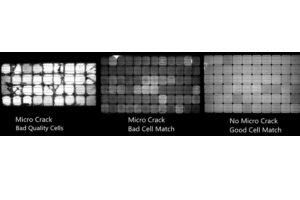
What is EL Test and why does it matter for solar panels? Bright Solar uses 100% EL testing to detect micro-cracks, hidden defects and efficiency loss in every module, ensuring stable performance for homes, businesses, RVs and marine systems.
 Bright solar